
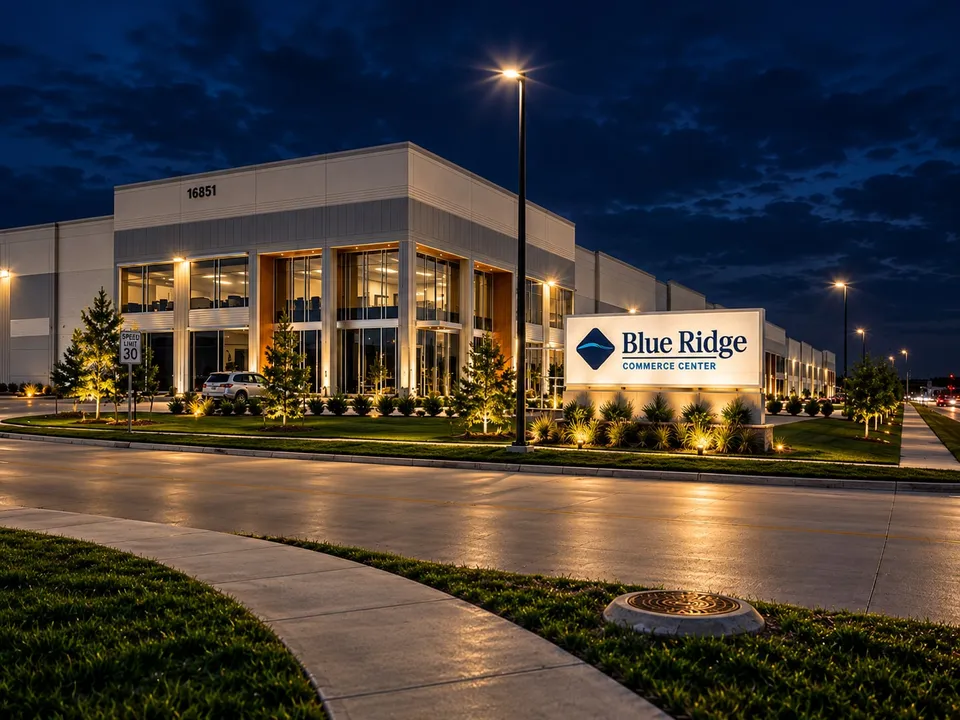
What a cabinet sign is
A cabinet sign, also called a box sign or light box, is a metal enclosure with a translucent graphic face and lighting inside. Everything the sign says lives on that face, which makes it the most flexible sign type there is: a logo, a name, a tagline, a phone number and an address can all share one cabinet.
You see them on storefront fascias, on pylon poles at retail centers and dealerships, and set into monument bases at office parks. Because the face is a single panel, a cabinet is also the easiest sign to update when a business rebrands.
Construction
- Cabinet. Aluminum, either an extruded frame system for standard rectangles or fully fabricated for shapes, with a painted finish. Depths run from 5 to 12 inches depending on size and illumination.
- Faces. Flat polycarbonate or acrylic with translucent vinyl or direct print; flex face for very large cabinets; or routed aluminum with push-through acrylic for a premium look.
- Illumination. LED modules laid out on the back of the cabinet to light the face evenly, with no hot spots or dark bands. We no longer install fluorescent in new cabinets; LEDs draw a fraction of the power and last far longer.
- Retainers. The trim that holds the face, either a hinged retainer for easy face changes or a fixed retainer for a cleaner edge.
- Electrical. UL-listed power supplies inside the cabinet, a disconnect at the sign, and a weather-tight connection to the building circuit.
Face options
Printed faces put the full-color artwork on a white translucent panel. Fastest and least expensive, and the standard for tenant panels and most retail.
Routed push-through faces cut the graphics out of an opaque aluminum face and push acrylic through. Sharp edges by day and a lit-graphic-on-dark-face effect at night. Common for medical, office and higher-end retail.
Routed with backed-up acrylic is the middle option: cut-outs backed with acrylic flush to the face.
Day/night faces read as one color by day and another at night, used when a brand needs a dark daytime look but a bright night presence.
Where cabinets go
Wall-mounted on a storefront fascia or building parapet, single-face, lit from inside. The typical alternative to channel letters when the landlord allows it.
On a pylon as the identification cabinet at the top, or as the multi-tenant cabinet with panel tracks. See pylon signs.
In a monument as the lit graphic area set between a base and a cap. See monument signs.
Projecting or blade cabinets mounted perpendicular to the wall so they read to foot traffic along a sidewalk.
Code and permits
An illuminated cabinet in the City of Houston needs a sign permit and an electrical permit. Wall cabinets over the size threshold need sealed attachment calculations; freestanding cabinets always need sealed foundation and structure drawings. Sign area is measured on the whole face, so a cabinet uses the property’s allowance faster than a set of letters does. We check the allowance for your address before drawing and handle the application. The permit guide has the fees.
Common Houston situations we handle
Storefront replacement. A dated cabinet with a faded face and failing fluorescent lamps is replaced with a new LED cabinet on the same wall pattern, often reusing the existing electrical, in a single day.
Pylon identification cabinets. The big cabinet at the top of a center’s pylon carries the property’s name. We fabricate new cabinets for new pylons and replacement cabinets for existing poles when the old ones have rusted through. See pylon signs.
Multi-tenant cabinets. Cabinets built with panel tracks so each tenant’s face slides in and out. The right retainer design saves a property manager money on every turnover for the life of the sign. See tenant panels.
Dealerships and auto service. Large double-face cabinets on poles or canopies, often with a brand program’s exact color and face specification, installed by crane.
Restaurants and QSR. Menu-board cabinets, drive-through directionals and building signs as one package, so the permits and the electrical are coordinated.
Medical and professional. Routed push-through cabinets on monument bases, where the code or the landlord prefers a low-profile sign to a pylon.
What affects the cost
The installed range below covers a typical wall or replacement cabinet. The main drivers are face size, single versus double face, printed versus push-through faces, and mounting height. A cabinet on a new pylon or monument is quoted with that structure.
Maintenance
A well-built LED cabinet needs little attention: a face cleaning once or twice a year, and a check of the photocell or timer after any power outage. When a section goes dark, it is almost always a power supply, which our repair crew replaces in one visit. We keep the face artwork on file so a damaged face can be reprinted without redrawing it.
Timelines
Fabrication runs two to three weeks from approved artwork, in parallel with the permit. Wall cabinets are a one-day install. Re-faces of existing cabinets are often faster, since there is no new structure or permit.