
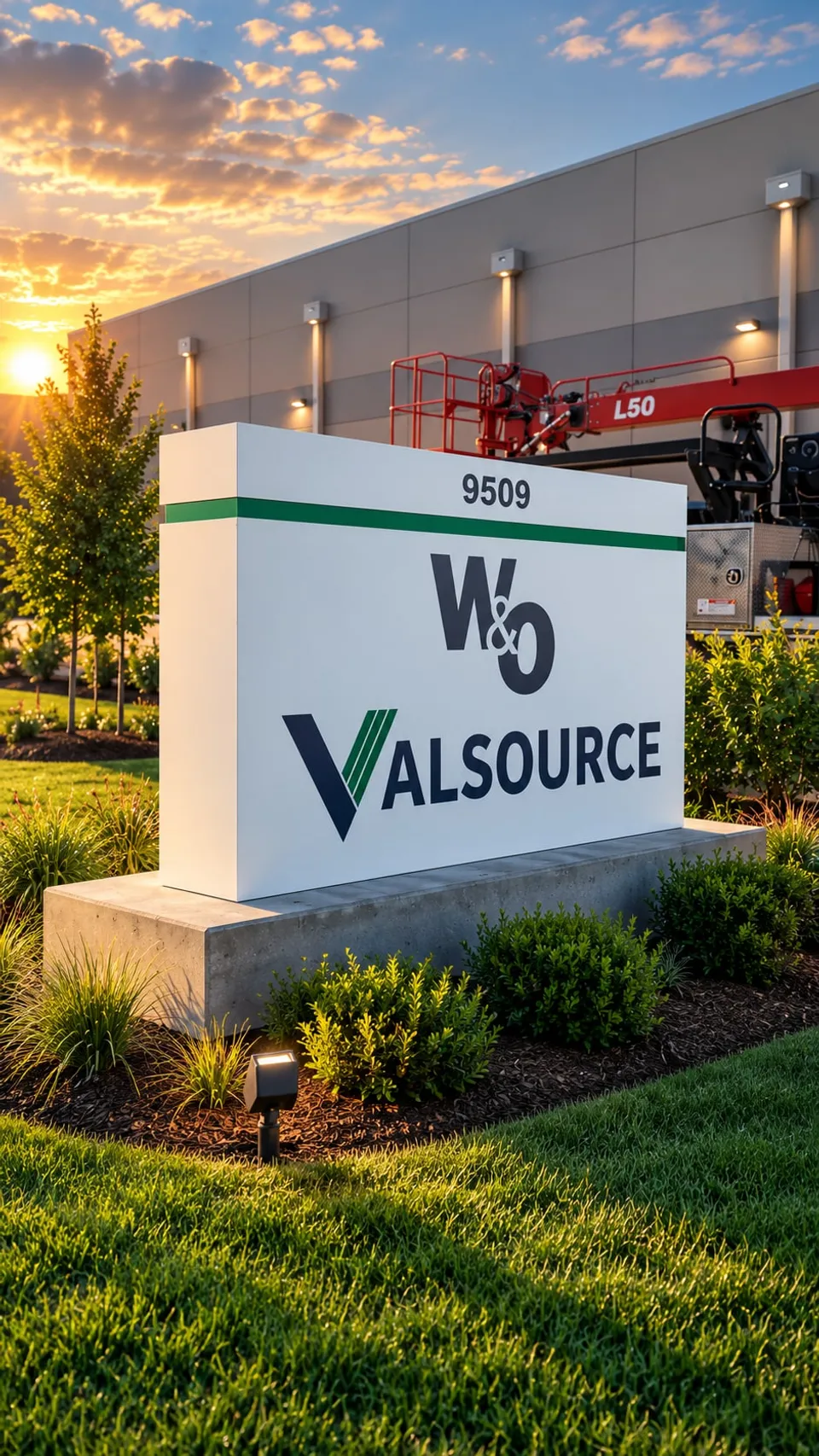
What a monument sign is, and when it beats a pylon
A monument sign is a freestanding sign with its base on the ground, usually no taller than a person can reach. It is the sign at the entrance of a subdivision, a medical office park, a church, a car dealership’s service drive, or a retail center where the code or the landlord does not allow a tall pole sign.
Monuments read at street speed for drivers turning in, not from a freeway. If your customers need to find you from a quarter mile away, that is a pylon sign. If they need to confirm they have arrived, and you want the entrance to look established, that is a monument.
Many Houston-area jurisdictions and most master-planned developments prefer or require monuments over pylons, and a lot of retail centers built in the last fifteen years have a monument at each driveway with tenant panels instead of a single tall pylon.
Construction types we build
Masonry and stone. A welded steel or aluminum frame on an engineered foundation, clad in brick, cast stone or natural stone veneer, with a cast or precast cap. This is the standard for subdivisions, churches and office parks. It is heavy, permanent and needs very little maintenance.
Stucco and EIFS. The same frame, sheathed and finished in stucco or an exterior insulation system, painted to match the building. It gives the look of a masonry monument at a lower cost and weight and can take curves and details that brick cannot.
Aluminum. A fabricated aluminum cabinet with a painted or textured finish, which can be internally lit, routed with push-through letters, or fitted with tenant panels. This is the fastest to build and the most common for retail and medical.
HDU and sandblasted. Carved high-density urethane faces mounted to a base, for a dimensional, traditional look. Popular for professional offices, restaurants and country-club style properties.
Most monuments combine two of these: a stone base and cap with an aluminum lit cabinet in the middle is probably the most common configuration we build.
Illumination options
- Internally lit cabinet: the graphics area is a lit box with a translucent face or push-through acrylic letters. Reads clearly at night.
- Halo-lit or face-lit dimensional letters mounted to a solid base, for a subtler look.
- Ground lighting: low-voltage fixtures washing a non-lit monument, common for subdivisions and churches.
- Non-lit: a solid sign in a lit landscape, which some homeowner associations prefer.
If the sign is lit, the electrical service to the location has to exist or be added. That trench and conduit is often the surprise line item on a monument quote, and we identify it at the survey rather than after the foundation is poured.
Foundations and Houston soil
This is where a Houston monument differs from one built almost anywhere else. Much of Harris and Fort Bend counties sits on expansive clay that swells in wet months and shrinks in summer. A shallow slab on that soil moves with it, and after a few seasons the sign leans.
The fix is an engineered foundation, typically a drilled pier below the active soil zone or a spread footing sized for uplift as well as wind. A Texas-licensed engineer specifies it based on the sign’s size, weight and the soil, and the sealed drawing is part of the permit application. It is not optional, and it is the reason our monuments are still plumb years after they were set.
Address numbers, sight lines and setbacks
Three practical details decide whether a monument passes review and works in real life:
- Address numbers. Fire code and most jurisdictions require the street address on the sign, at a size readable from the road. We build it in rather than sticking it on later.
- Sight-line triangles. A monument near a driveway cannot block a driver’s view of traffic. The survey checks the location against the sight triangle before we draw anything.
- Setbacks and easements. The sign has to sit outside the right-of-way and clear of utility easements, and in Houston the setback rules change with the street classification. The site plan we submit shows all of it dimensioned.
What affects the cost
Installed monument signs in the Houston area typically fall in the range shown below. The biggest drivers are overall size and height, the cladding material, whether the sign is lit, how many tenant panels it carries, and the foundation the soil demands. A single-tenant aluminum monument on an existing power source is at the low end; a two-sided stone-clad multi-tenant monument with a trenched electrical run and landscape lighting is at the top.
Timelines
From an approved design, engineering and the permit take two to four weeks depending on the jurisdiction, and the structure is fabricated in the shop during that window. Once the permit is issued, the foundation is drilled and poured and needs cure time before the structure is set, then cladding, faces and electrical follow. Six to ten weeks is typical; masonry-heavy subdivision entrances with landscaping run longer.
Who we build monuments for
Property managers who need matching monuments at every driveway of a retail center, general contractors who need the entrance sign done before the certificate of occupancy, medical and dental practices that want a permanent, professional entrance, churches, and dealerships with separate sales and service entrances. If you have a landlord criteria package or an HOA design standard, send it with the quote request and we will design to it from the start.