
Installation is where sign projects succeed or fail
A sign can be built perfectly and still be a problem if it goes up crooked, if the fasteners are wrong for the wall, if the wiring is not weather-tight, or if nobody scheduled the inspection. MorSigns installs with our own crew and our own equipment, so the people who surveyed the wall are the people setting the sign on it.
We install three kinds of work: the signs we fabricate, signs you already own or have purchased elsewhere, and signs shipped to Houston by national sign programs, franchisors and out-of-town sign companies that need a local installer.
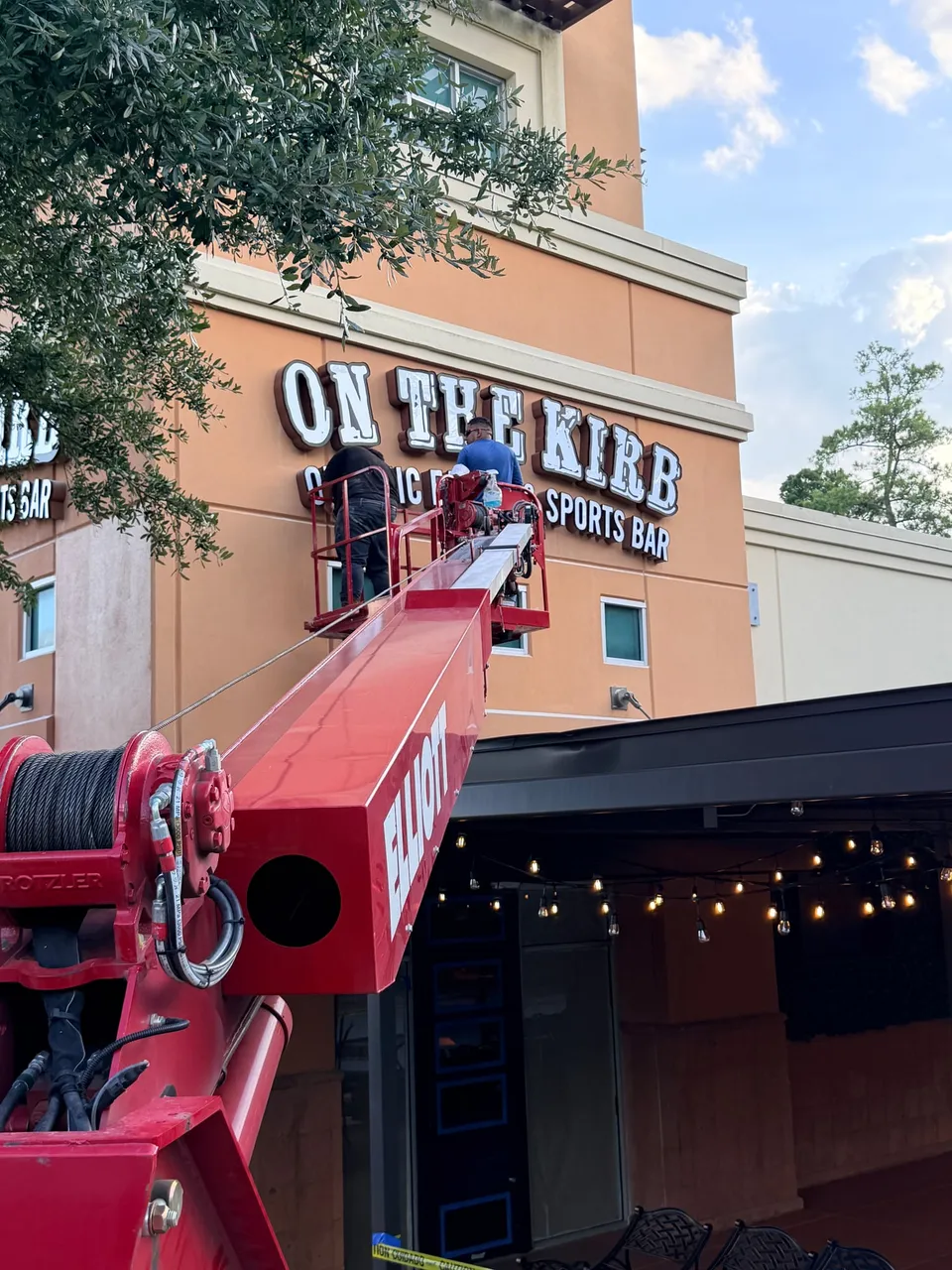
Equipment: bucket truck versus crane
Bucket trucks handle the majority of commercial sign work: channel letters and cabinets on one- to three-story facades, tenant panel swaps on pylons, and repairs. They set up quickly and need less space.
Crane service is for what a bucket cannot do. Setting pylon poles and cabinets, placing monument structures on their foundations, lifting heavy cabinets to high elevations, rooftop signs, and installs where the truck cannot get close, such as over a canopy or a deep landscape bed. Our crane is part of the crew, not a rental we schedule around.
The survey decides which equipment a job needs, and the quote says so. If you are comparing installation quotes, ask whether the crane is included, because it is a common line to leave off and add later.
Wall types and how we attach to them
Houston commercial buildings put signs on a handful of wall types, and each one is fastened differently:
- EIFS and stucco over framing: fasteners have to reach the structure behind the foam, and every penetration gets sealed. This is the most common fascia on retail centers and the one most often done wrong.
- Brick and CMU: masonry anchors sized for the load, placed in the block or brick rather than the mortar joint.
- Tilt-wall concrete: drilled anchors into the panel, which is common on industrial and big-box buildings.
- Metal panel: attachment through the panel to the girts behind it, with backing where the sign needs it.
- Storefront and glass: signs mount to the framing, never the glass, and often need a backer or raceway.
For wall signs above a size threshold, the attachment is engineered and sealed as part of the permit. That calculation is specific to the wall and the sign, and it is why we survey rather than quote from a photo.
Freestanding sign installation
Pylons and monuments are set in two phases. The foundation is drilled and poured to the engineer’s drawing and left to cure. On setting day the structure is craned onto the anchor bolts, plumbed and bolted, the cabinets or cladding are placed, and the electrical is connected at the sign. For retail properties that means a few parking spaces closed for part of a day, scheduled early or off-peak. See pylon signs and monument signs for what goes into each.
Electrical and inspections
Illuminated signs in the City of Houston need an electrical permit and an inspection in addition to the sign permit. MorSigns is a licensed electrical sign contractor with the City of Houston (License #137), so the electrical side stays in-house: our crew connects the sign at the sign location, makes the wiring weather-tight, and calls in the inspection. When a new circuit has to be run from the panel, that is quoted separately and scheduled so the circuit is live before install day. Our permit guide covers the fees and what the city expects to see.
National accounts and subcontract installs
If you are a sign company outside Houston, a franchisor’s sign program, or a national brand rolling out locations, we act as your local installer: receive the sign at our shop, inspect it, pull the local permit when required, install to your spec, photograph the finished work, and close out the inspection. You get a single point of contact who knows the local jurisdictions.
What affects the cost
Installation-only projects in the Houston area typically fall in the range shown below. The drivers are the sign’s weight and mounting height, bucket truck versus crane, the wall type, how far the truck has to set up from the wall, whether a permit and engineering are needed, and any electrical work. A raceway set of channel letters on a single-story EIFS fascia is at the low end; a crane-set cabinet at the fourth story with a new circuit is toward the top.
Removal and patching
Taking down the old sign is part of most installs, and we quote it as one visit: remove the sign, cap and make safe the electrical, patch and paint the mounting holes, and dispose of the old sign. Property managers turning over a space can also book removal on its own so the fascia is clean before a new tenant’s sign company arrives.
Scheduling
Tell us the constraint: an opening date, a landlord deadline, a grand-opening event, hours when the parking lot has to stay open. We schedule installations around them, including nights and weekends when a site needs it, and we confirm the day before with the truck and crew assigned.