
MorSigns

sign removal Houston

Sign Removal in Houston: Take-Downs, Wall Patching and Disposal

Tenant moved out, brand changed, or a sign that has become a hazard. We take it down safely, make the electrical safe, patch the wall and haul it away.

  • Wall signs, pylons and monuments
  • Electrical capped and made safe
  • Holes patched and painted to match
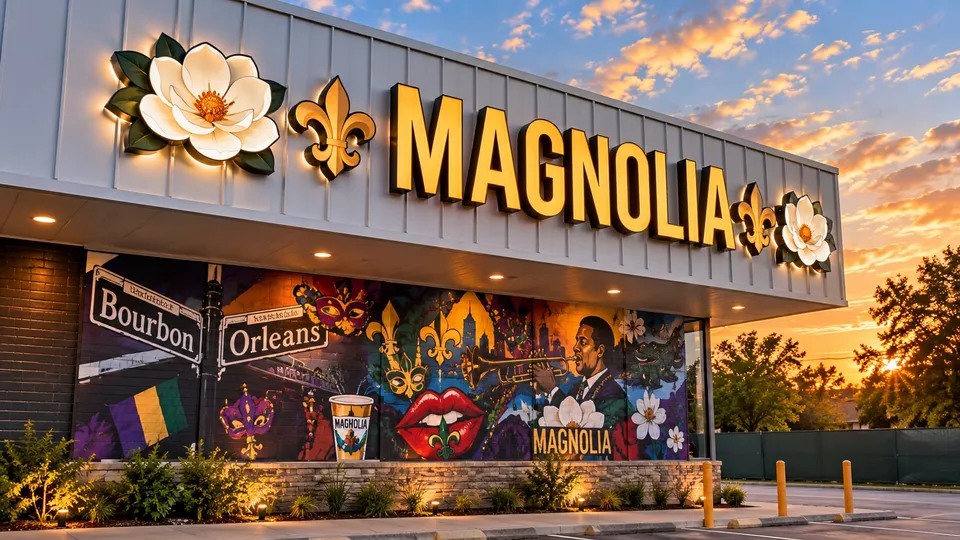
Magnolia restaurant at dusk: gold front-lit channel letters reading MAGNOLIA on a corrugated parapet, with dimensional fleur-de-lis and white magnolia flower logo elements, above a New Orleans-themed mural wall
Magnolia, front-lit channel letters with dimensional logo elements · Houston, TX

When signs come down

Signs come down for a handful of reasons: a tenant vacates, a business rebrands, a property is being sold or repositioned, a sign has been damaged and is now a hazard, or a new sign is going up in its place. In every case the job is the same three parts: take the sign down without damaging the building, make the electrical safe, and leave the wall or site ready for what comes next.

It’s unglamorous work, and it’s easy to do badly. A sign pulled off a fascia in a hurry leaves torn EIFS, live wires in a hole and a stain where the letters used to be. We treat removal as a proper job with a survey, the right equipment and a finished patch.

What we remove

  • Channel letters and raceways from fascias and parapets, including the wiring behind them.
  • Cabinet signs from walls, canopies and building faces.
  • Blade and projecting signs and their brackets.
  • Pylon and pole signs, cabinets and structure, with the foundation cut below grade or removed.
  • Monument signs, including masonry bases.
  • Awnings, canopy fascia graphics and window vinyl as part of a tenant turnover.
  • Interior signs and lobby letters, with drywall patched.

How a removal goes

  1. Survey. We look at how the sign is attached, what’s behind it, where the power comes from, and what the surface will need. We note any lane, sidewalk or parking closure the lift will require.
  2. Make it safe. Power off, the sign disconnected, conductors capped in a junction box at the wall or pole and labeled.
  3. Take it down. Bucket truck for wall signs, crane for pylons and heavy cabinets. Letters and cabinets are lowered, not dropped.
  4. Patch and paint. Fastener holes filled with the right material for the wall, primed and painted to blend. Raceway shadows are painted out.
  5. Haul away. The sign is disposed of, or recycled where aluminum and steel can be. If you want the sign kept, we crate it.

For pylons, the pole is cut and lifted in sections, and the foundation is handled as agreed: cut below grade and covered with soil or concrete, or excavated and removed when a new sign or paving is going in.

Property managers and tenant turnover

For a multi-tenant property, removal is the first step of every turnover. We keep a file per property so we know the fascia type and the patch color, we can put up a blank panel or “Available” sign on a vacant pylon position, and we can schedule the removal and the new tenant’s installation as one visit when the timing works. Our tenant panel service covers the pylon side.

Storm and hazard removals

A sign hanging loose after a storm needs to come down before it comes down on its own. We prioritize these, make the sign safe first, photograph the damage for your insurance claim, and quote the repair or replacement after.

What we need from you

Very little. The address and a photo of the sign are enough to quote most wall removals. For a pylon or monument we survey in person. Beyond that:

  • Authorization. If you are the tenant, the landlord usually has to approve the removal and the patch specification, because the wall is theirs. If you are the property manager, we need a contact for site access.
  • Power access. The disconnect or breaker for the sign circuit. If nobody knows where it is, we find it.
  • What to do with the sign. Dispose of it, recycle it, or crate it for you. Some brands require their sign elements returned or destroyed when a franchise or fuel-brand agreement ends; tell us and we document it.
  • Timing. Retail properties often want removals done before opening or after closing so the lot stays clear. Nights and weekends are available.

Removal as part of a rebrand

A rebrand is a removal and an installation on the same wall. We survey once, permit the new sign while the old one is still up, and on install day the old sign comes down, the wall is patched where the new sign won’t cover it, and the new sign goes up. One lift, one day, no period with a bare wall.

What affects the cost

The installed range below covers typical wall sign removals. The drivers are the sign’s size and height, whether a crane is needed, the wall material and the extent of patching, and, for freestanding signs, what happens to the foundation. Removal combined with a new installation is priced as one visit.

Safety

Sign removal puts people on lifts under loads, near power, over sidewalks and parking. Our crew barricades the work zone, de-energizes before touching wiring, and rigs cabinets and pole sections so nothing free-falls. If a removal needs a lane or sidewalk closure, we pull the closure permit and set the traffic control.

Timelines

Wall sign removals are usually scheduled within a week or two and finished in a few hours. Pylon and monument demolition depends on crane scheduling and any permit for the foundation or lane closure.

Pricing

What it typically costs, installed

Real installed totals for the Houston area, not a rate card. Every number below includes fabrication, permit drawings and installation unless noted.

Sign removal and wall patch

$500$3,500

Installed. Removal, disposal, capping of electrical, and patching of mounting holes.

What moves the number

  • Size and height
  • Pylon vs. wall sign
  • Foundation removal required

Ranges are typical installed totals for the Houston area and are not a quote. Your price depends on the drivers listed; we confirm it after a site survey.

How it works

Survey to warranty, one crew

  1. Step 1

    Site survey

    We measure the facade or sign location, photograph it, confirm power and check setbacks and landlord criteria.

    We identify how the sign is attached, where its power comes from, and what the wall will need after.

  2. Step 2

    Design

    Scaled drawings of the sign on your building or site, with materials, colors and illumination called out.

    For removals, this step is the plan: equipment, lane or sidewalk closures, and the patch specification.

  3. Step 3

    Engineering

    A Texas-licensed engineer seals the structure, foundation or wall attachment for Gulf Coast wind loads.

    Only for pylon or monument demolition where the foundation is being removed.

  4. Step 4

    Permit

    We assemble and submit the application, answer plan-review comments and pick up the approved permit.

    Removing a sign rarely needs a permit; demolishing a pylon and its foundation sometimes does.

  5. Step 5

    Fabrication

    Built in our Harwin Drive shop. You get photos before anything leaves the building.

    Not applicable, unless a cover panel or blank is being made for the vacant position.

  6. Step 6

    Installation

    Our crew installs with our own bucket truck or crane, then calls in the city inspection.

    The removal itself: sign down, wiring capped at a junction box, holes filled and painted, debris hauled.

  7. Step 7

    Warranty

    One-year workmanship warranty on the installation; LEDs and power supplies carry the manufacturer's warranty.

    Workmanship on the patch is ours.

Projects

Sign Removal projects

Full gallery
  • Magnolia, front-lit channel letters with dimensional logo elements

    Houston, TX

  • Halo-lit letters, installation day

    Sugar Land, TX

  • W&O Valsource, monument sign

    Katy, TX

  • Fuqua Center, multi-tenant pylon sign

    Houston, TX

  • Pioneer Village, pylon re-face with LED retrofit

    Cypress, TX

  • Dieselcore, LED retrofit of halo-lit letters

    Houston, TX

FAQ

Questions we get on the phone

Who is responsible for removing a tenant's sign?

Usually the outgoing tenant, under the lease, but in practice the property manager often has to arrange it after the tenant is gone. We work for either. The lease typically requires the wall to be returned to its original condition, which is why we patch and paint rather than just take the sign down.

What happens to the electrical?

We disconnect the sign, cap the conductors in a weather-tight junction box at the wall or pole, and label it so the next sign company has power waiting. If the circuit should be de-energized at the panel, we coordinate that with the building's electrician or handle it ourselves.

Will the wall look patched?

On painted stucco, EIFS or drywall, a good patch and a paint blend is close to invisible. On brick and stone, the holes are filled with matching mortar and remain faintly visible up close. On metal panel, the holes are plugged and painted. We tell you what to expect at the survey.

Can you remove a pylon sign?

Yes. The cabinets come down by crane, the pole is cut and lifted, and the foundation is either cut to below grade and covered or fully removed, depending on what's going in its place. Foundation removal is a bigger job and is quoted after the survey.

Do you need a permit to remove a sign?

Rarely for wall signs. Demolishing a freestanding sign and its foundation sometimes needs a permit, and any lane or sidewalk closure for the crane needs one. We check and include it. See the permit guide.

Can you remove the old sign and install the new one in one visit?

Yes, and it's the most economical way to do a rebrand or a tenant change: one trip, one lift, the old sign off and the new one on the same day. See installation.

Quick quote

Ready to price your sign removal?

Three fields. We’ll call with a ballpark and tell you what a site survey would firm up.

832-667-8835

Call now Get a quote